
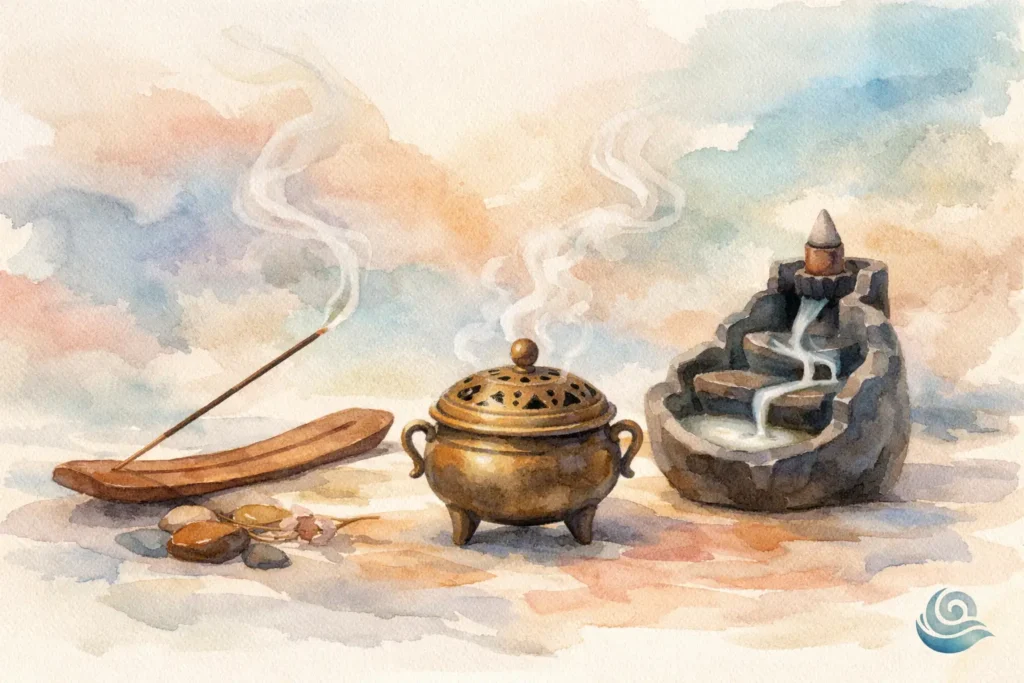
A burner can look wonderfully witchy on a shelf or perfectly at home beside your favourite fandom collectables, but the safest choice is not always the most dramatic one. If you are wondering which incense burner is safest, the short answer is this: a stable, heat-resistant burner made for the exact type of incense you use is usually the best option.
That might sound obvious, yet it is where most problems start. Cone incense, stick incense, charcoal resin blends and backflow cones all burn differently, throw off heat in different ways and need different amounts of airflow. A burner that suits one style beautifully can be awkward, messy or outright risky with another.
Which incense burner is safest for most homes?
For most people, the safest incense burner is a simple ceramic or metal holder with a wide, steady base and enough ash-catching space around the incense. It should sit flat, feel solid in the hand and keep the lit tip or cone well contained. In practical terms, that usually means a proper stick holder with a tray or dish, or a cone burner with a deep, heat-safe bowl.
Ceramic is often a strong choice because it handles heat well and does not tip easily if the design is broad rather than tall. Metal can also be very safe, especially when the burner is sturdy and designed to contain ash cleanly, but it may get hotter to the touch, so placement matters more. Lightweight wooden ash catchers are popular and perfectly fine for many stick incenses, though they are not always the best all-round option if you want maximum heat resistance.
If you burn incense regularly, the safest choice is rarely the most delicate or novelty-shaped piece. It is the one that does its job without wobbling, overheating or letting embers escape.
The safest burner depends on the incense type
This is the part shoppers often miss, especially when choosing a gift. A beautiful burner still needs to match the incense format.
Funky Stride Our Sister Site
Our sister site Funkystride.com has a number of incense sticks and cones and we get them and use them regularly. The range is extensive and the prices are low. Check out the range here: Funkystride Incense Sticks and cones.
Stick incense
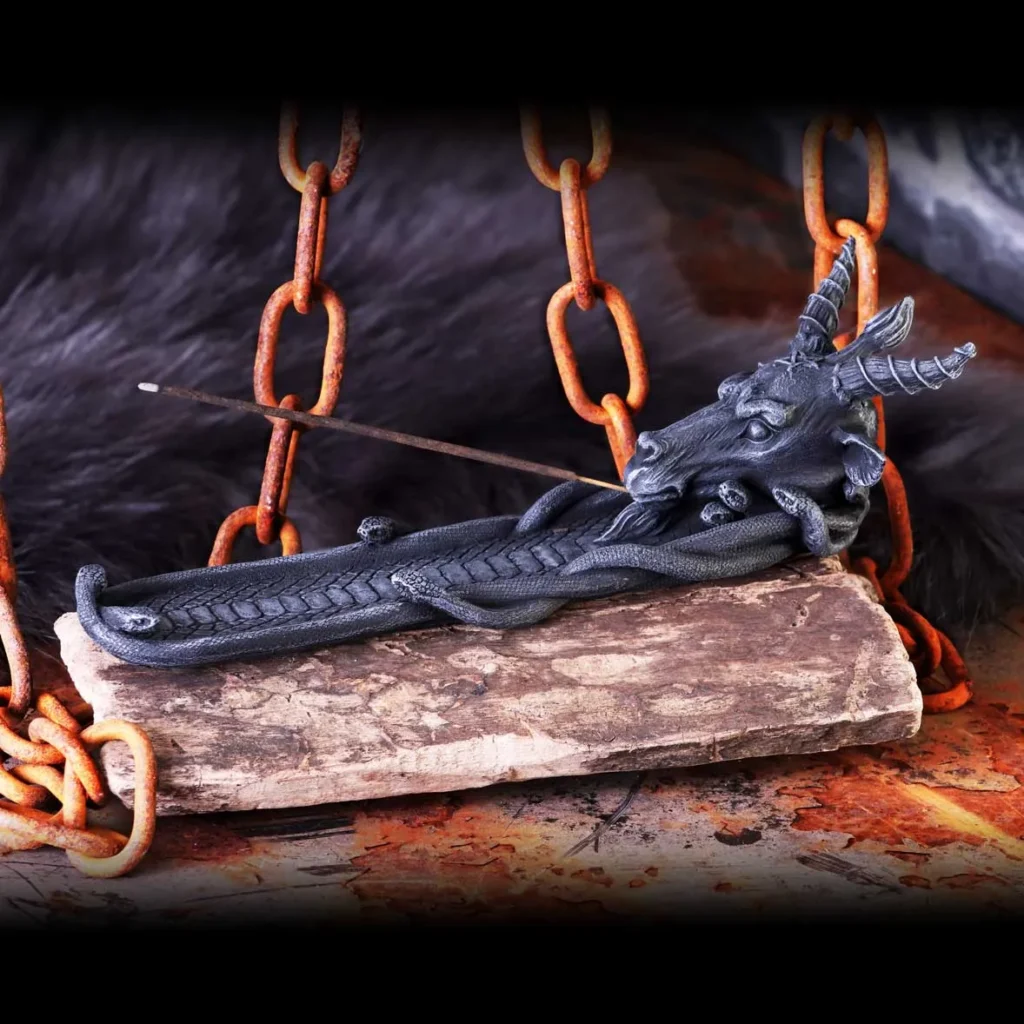
Stick incense is usually the easiest to burn safely. The safest holders for sticks are those with a firm anchor point and a tray long enough to catch falling ash from end to end. If the ash drops over the side, you will end up with dusty surfaces at best and a smouldering problem at worst.
A flat ash catcher can work well for standard sticks, but the safer versions are the ones that feel solid and leave plenty of room beneath the burning tip. If the stick sits too low or too close to painted, varnished or decorative surfaces, heat marks become more likely.
Cone incense
Cone incense burns hotter in a concentrated spot, so it needs a burner that can tolerate direct heat. A proper ceramic or metal cone burner is usually safer than improvised dishes or decorative trays. The cone should sit in a recessed area where ash stays contained and the base will not scorch.
This matters even more with heavily scented cones that burn for longer. A shallow burner can allow ash to spill or make clean-up more awkward, which encourages people to move hot residue before it has cooled.
Backflow incense cones
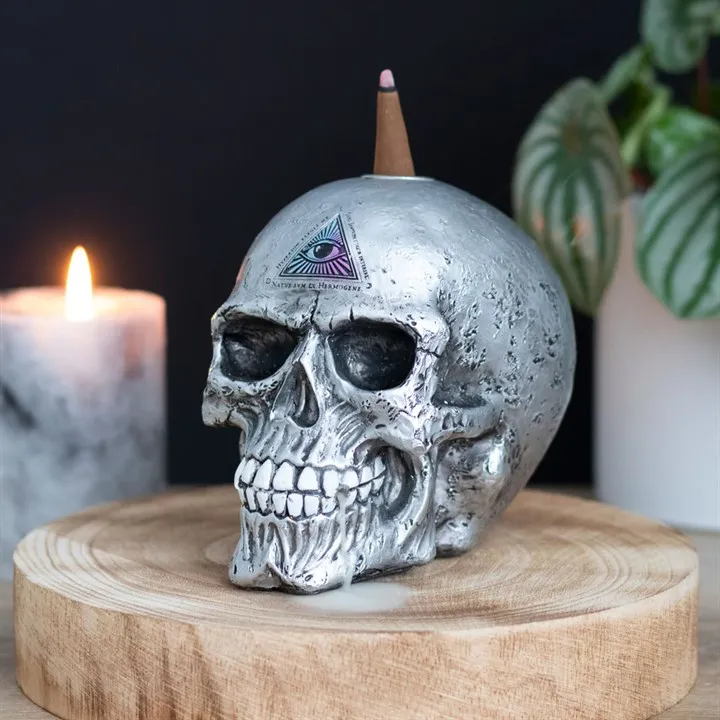
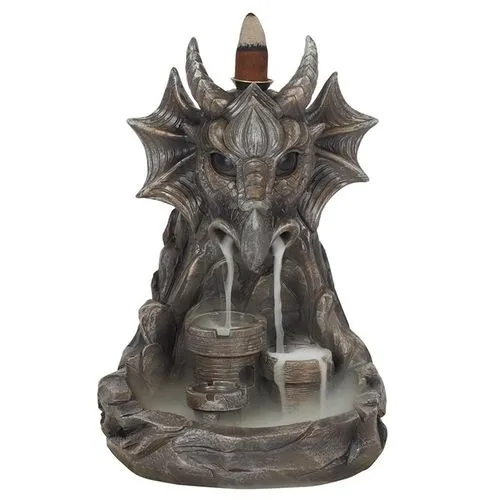
Backflow burners are wonderfully theatrical. The smoke pools, curls and trails through little castles, skulls or mystical scenes, which is exactly why they make such eye-catching gifts. They do, however, need a bit more care.
The burner itself should be made specifically for backflow cones, and it should be fully heat resistant. Because the smoke oil residue can build up, these burners need regular cleaning. A residue-coated surface is not usually dangerous on its own, but it can become sticky, stain furniture and make people place burners on unsuitable surfaces to protect display pieces.
Resin incense with charcoal
This is where extra caution is needed. Charcoal discs burn much hotter than standard sticks or cones, so the safest burner is a dedicated resin incense burner with a heatproof bowl, stable base and, ideally, a way to handle it without touching the hottest parts. Sand in the bowl adds another layer of protection because it helps distribute heat.
If you are new to incense, this is not the most beginner-friendly route. It can smell incredible and feel properly ritualistic, but it is also the setup that demands the most respect.
Materials matter more than style
It is easy to fall for a burner because it looks magical, gothic or collectable. There is nothing wrong with that. Half the fun is choosing something with personality. Still, the material tells you more about safety than the theme does.
Ceramic is one of the safest and most versatile options because it is heat resistant, widely available and easy to keep clean. Thicker ceramic pieces tend to feel more dependable than very thin decorative ones.
Metal is durable and often excellent for resin or cone use, but some designs become very hot externally. That is not a deal-breaker, just something to factor in if you have children, pets or not much shelf space.
Stone and soapstone can also be good, particularly for traditional incense use, as they are weighty and generally stable. Glass is the one to treat cautiously unless it is specifically sold as heat resistant for incense. Ordinary decorative glass is not worth the gamble.
Wood looks lovely and suits many stick holders, but it should not be your first pick for cone or charcoal burning unless the design includes a proper metal or ceramic insert.
What makes a burner actually safe?
The safest incense burner is not just about material. A few design details make all the difference.
A wide base lowers the risk of tipping. A contained burning area keeps ash and embers where they belong. Enough distance between the burning incense and the outer edges helps prevent heat damage. Good airflow allows the incense to burn as intended without trapping too much heat.
You also want a burner that is easy to clean. If ash, resin or burnt fragments collect in awkward corners, people tend to knock them out too soon or skip maintenance altogether. Neither is ideal.
There is also the question of placement. Even the safest burner becomes a poor choice if it only works when balanced on a crowded windowsill beside curtains, paperbacks and trailing cables.
Which incense burner is safest if you have pets or children?
If pets or children share the home, go for weight, simplicity and containment over ornate shapes. A low ceramic burner with a broad base is usually safer than a tall, narrow or top-heavy design. Covered mesh-style burners can also help for certain incense types, especially if curious paws are part of the household scenery.
Backflow burners can be tempting to leave out as display pieces, but their sculptural shapes sometimes make them easier to knock. If your cat treats shelves like an obstacle course, stability matters more than theatrics.
In these homes, it also makes sense to choose a burner that stays in one dedicated spot, ideally high up, uncluttered and well away from fabric. The safest burner is partly about product design and partly about whether your space allows you to use it sensibly.
Common safety mistakes shoppers make
One of the most common mistakes is using a burner for the wrong incense type. Another is choosing based only on appearance. That dragon skull burner may look gloriously dramatic, but if the cone perches on a narrow ledge with nowhere for ash to settle, it is not the safest pick.
People also underestimate heat transfer. A burner may look cool enough on the outside while the underside gets surprisingly warm. That is why a heat-resistant surface underneath is always wise, even if the burner itself seems substantial.
Then there is simple overconfidence. Leaving incense unattended for “just a minute” is how little mishaps happen. Incense is part home fragrance, part atmosphere, part ritual – but it is still an open, smouldering heat source.
The best choice for gifting
If you are choosing a burner as a gift, the safest route is a versatile ceramic holder or cone burner from a specialist retailer that clearly states what it is designed for. That way the recipient gets something stylish enough to feel special and practical enough to use without guesswork.
This is especially useful if you are buying for someone who loves magical décor, gothic interiors or fandom pieces but is newer to incense. A burner that is easy to understand will get more use than one that looks impressive but comes with hidden quirks. At The Hidden Hatch, that balance between character and usability is exactly what makes a gift feel properly considered.
So, which incense burner is safest? Usually, it is the one that feels almost a bit boring in the best possible way: stable, heat resistant, easy to clean and made for the incense you actually burn. Choose that foundation first, then pick the style that suits your shelf, your mood and your favourite little corner of the house.
When choosing an incense burner, prioritizing safety means looking at thermal stability, material durability, and ash containment. To help your customers make an informed and safe choice, the following guide outlines the safest options available, paired with an informative customer-focused QandA.
Which Incense Burner is safest?
Incense Burner Safety Comparison
| Burner Type | Material Profile | Safety Advantages | Best Suited For | Risk Factors to Consider |
| Heavy Soapstone / Marble | Natural, dense metamorphic stone. High thermal mass. | Heavy and highly stable; excellent heat absorption; cannot warp or suffer thermal shock. | Incense cones, regular sticks, and intensive daily rituals. | Heavy to move; can crack if dropped on hard flooring. |
| Solid Brass / Copper | Industrial-strength metal alloy. Exceptionally high melting point. | Completely non-flammable; zero risk of cracking under heat; will last a lifetime without charring. | Resin burning (with charcoal discs), cones, and heavy-use environments. | Transfers heat quickly; must always sit on a heat-resistant mat or coaster. |
| Deep-Channel Ceramic | Thick, kiln-fired clay with high-quality glaze. | Catches 100% of falling ash; non-flammable; easy to wipe clean of oils and residues. | Long incense sticks and everyday home fragrance. | Thin or cheap ceramic can experience “thermal shock” and snap under intense heat. |
| Enclosed Wooden Smudging Boxes | Natural treated hardwood, typically with a brass inlay or internal track. | Keeps the glowing ember fully enclosed and protected from sudden draughts, children, or pets. | Households with busy spaces or pets; standard incense sticks. | Wood can scorch or dry out over time if the internal metal lining is missing. |
Customer QandA: Choosing the Safest Incense Burner
Q: Which incense burner is safest for daily home use?
A: The safest incense burner is one made from a heavy, non-flammable material with high thermal mass, such as solid brass or thick soapstone. These materials easily withstand the intense heat of a smouldering ember without cracking or warping. For maximum safety, look for a burner that is physically heavy (so it cannot be easily knocked over by pets or a draught) and features a wide, deep channel to catch 100% of the hot ash.
Q: Why should I avoid cheap or thin decorative incense holders?
A: Lightweight plastic or resin holders can melt or catch fire if they come into direct contact with a hot ember. Additionally, very thin ceramic or glass dishes are highly susceptible to “thermal shock”—the sudden concentration of heat from an incense cone can cause the material to snap or shatter unexpectedly, spilling hot embers onto your furniture.
Q: Are enclosed wooden incense boxes safe to use?
A: Yes, provided they are well-made. Enclosed boxes (often called coffin burners) are excellent for homes with busy spaces because the lid conceals the live ember from curious fingers or paws. However, you must ensure the box features a fireproof internal lining—such as a brass track or ceramic base—to prevent the hot ash or stick from charring the wood.
Q: What is a “thermal shadow” and how do I prevent it?
A: A thermal shadow happens when heat radiating from the base of a burning incense cone dries out the surface directly beneath the burner. Over time, this can ruin wooden tables or mantels and make them brittle. To eliminate this risk, always choose an elevated burner (one with small feet) or place your burner on a thick, heat-resistant tile or coaster.
Q: How do I burn incense safely if I have pets or children?
A: First, always opt for a heavy brass or stone burner that requires a deliberate effort to tip over. Second, position your burner high up—ideally on a stable shelf at least four feet off the ground—well out of reach of children and wagging tails. Finally, ensure the room is well-ventilated by cracking a window; animals have incredibly sensitive respiratory systems and require clean, moving air.