
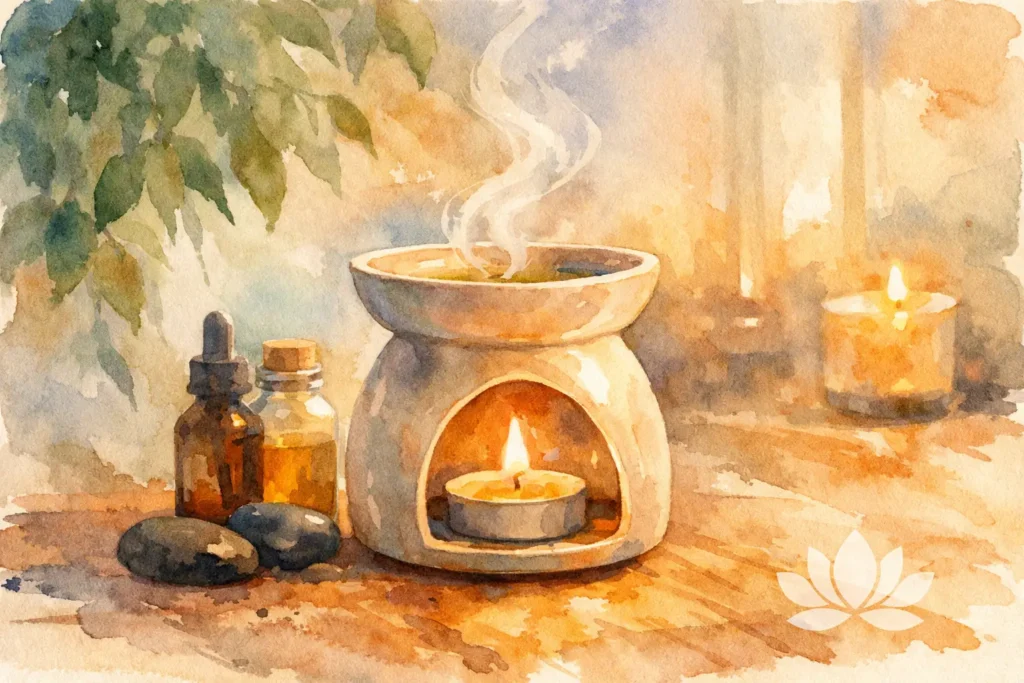
A glowing oil burner can make a room feel instantly more atmospheric – a little more magical, a little more put together, and far more personal than a generic air freshener. But if you are wondering are oil burners safe indoors, the honest answer is yes, they can be, provided they are used properly and with a bit of common sense.
That matters because oil burners sit in an interesting space. They are decorative, giftable, and often chosen for their character as much as their function, but they also use heat and fragrance in an enclosed home environment. So the real question is not whether they are automatically safe or unsafe. It is whether the burner, the oils, and the way you use them are suitable for your space.
Our sister site Funkystride has a great range of Oil Burners and it’s important before you buy that you consider the safety of your self and of course your pets. Our article on Pet Safety is a must read before you commit. If you want something a little different then our sister site The Hidden Hatch has some fantastic oil burners with a Gothic bent. Remember your pets are family and Pet Safety should be considered. Choose the correct oli for you oil burners and remember to use a natural wick.
Are oil burners safe indoors when used correctly?
In most homes, an oil burner is safe to use indoors if it is placed on a stable, heat-resistant surface, kept away from anything flammable, and never left unattended. The burner itself is usually very simple – a ceramic or similar holder, a tealight below, and water with a few drops of fragrance oil above. Used as intended, that setup is generally straightforward.
Where people run into trouble is usually not with the concept of an oil burner, but with poor placement or overconfidence. Putting one near curtains, shelves, paper decorations, bedding, or busy pets and children changes the risk completely. A small naked flame is still a naked flame, even if the burner looks decorative enough to blend into your room styling.
The quality of the burner also matters. A well-made burner designed for home fragrance use is far more reliable than something flimsy, cracked, or not intended to handle repeated heat. If the bowl is too shallow, the oil may evaporate too quickly. If the material is poor, heat stress can become an issue over time.
What makes an indoor oil burner unsafe?
Most safety concerns come down to four things: flame, heat, ventilation, and the fragrance being used.
The first is obvious. Because oil burners rely on a lit tealight, there is always a fire risk if they are knocked over, placed badly, or left burning too long. The second is surface heat. Burners can become very hot during use, including parts that do not look especially hot from a distance.
Ventilation is the next piece. Fragrance oils are designed to scent a room, but strong or prolonged use in a very small, closed space can become overwhelming. For some people, particularly those with asthma, fragrance sensitivity, or certain allergies, even a lovely scent can quickly tip from pleasant to irritating.
Then there is product choice. Not every scented oil belongs in a traditional oil burner. Some people assume any oil can be heated, but that is not a safe shortcut. You should only use oils intended for that type of burner and follow the instructions on both the burner and the oil packaging.
The difference between safe use and risky use
A burner used for an hour in a ventilated living room, with the correct amount of water and oil, is one thing. A burner left on a windowsill beside curtains for an entire evening while nobody is in the room is something else entirely.
That is why blanket yes or no answers can be misleading. Indoor use is not the problem by itself. Unsafe habits are.
How to use an oil burner safely indoors
If you enjoy home fragrance and want the ambience an oil burner brings, a few sensible habits make a big difference.
Start with where you place it. Choose a flat, uncluttered, heat-resistant surface well away from curtains, books, soft furnishings, hanging décor, and anything else that could catch fire. Do not squeeze it onto a crowded shelf just because it looks good there.
Use the correct amount of water and fragrance oil in the top dish. Running the burner dry can scorch residue and create unnecessary smoke or odour. Too much oil can also make the scent harsh rather than inviting.
Keep the room gently ventilated. You do not need a dramatic gust through the house, but some airflow helps prevent the fragrance from becoming heavy. This is especially useful in smaller bedrooms, bathrooms, or box rooms.
Never leave it unattended, even for what feels like a quick errand. Blow it out before leaving the room for any length of time, and definitely before going to sleep. Once finished, let it cool fully before touching or moving it.
If you live with children or pets, think practically rather than optimistically. A curious cat, a wagging tail, or a child reaching for a glowing tealight can turn a calm scene into chaos very quickly. In those homes, placement is everything, and in some rooms it may simply not be worth the risk.
Are oil burners safe indoors for every household?
Not always. This is where personal circumstances matter more than aesthetics.
If someone in your home has asthma, migraines triggered by scent, or respiratory sensitivities, an oil burner may not be the best choice, even if used exactly as directed. The issue may be the fragrance rather than the burner itself, but the result is the same – discomfort instead of atmosphere.
Homes with very limited ventilation can also be less suited to frequent burner use. The same goes for busy households where people are constantly moving through small spaces, or where pets have free rein over shelves and side tables.
There is also the question of routine. Some people love the ritual of lighting a burner and staying nearby while reading or relaxing. Others want something they can switch on and forget. If you know you are prone to distraction, a flameless alternative may be a better fit.
Are oil burners safe indoors for Bedrooms and bathrooms
People often ask whether bedrooms and bathrooms are suitable. They can be, but they need more caution. Bedrooms contain bedding, clothing, and often tighter layouts. Bathrooms can be humid, compact, and short on safe surfaces.
If you do use a burner in either, keep the session brief, ventilate the room, and stay present. It should never be part of a bedtime routine that continues after you fall asleep.
Choosing the right oil burner matters
A good oil burner is not just about style, though style certainly helps when you are choosing home décor with personality. It should also feel sturdy, balanced, and properly made for repeated indoor use.
Look for a burner with enough space between the tealight and the dish above, so the heat is effective without being excessive. A dish that is too small or shallow can be awkward to use safely. A burner that wobbles or feels fragile is best left on the shelf.
This is one reason curated retailers can be useful. When you are shopping for a burner as a gift or for your own space, it helps to choose from a range that has clearly been selected for both charm and practical home use, rather than grabbing the first novelty piece you see.
Fragrance oils, essential oils, and common confusion
One of the biggest mistakes people make is assuming all oils behave the same way. They do not.
Some burners are marketed for fragrance oils, while others may also be suitable for diluted essential oils. The key word there is diluted. Essential oils can be potent, and using too much or heating the wrong product can create a scent that is far stronger than expected. More is not better here.
Always check the instructions. If the oil says it is for use in burners, use it as directed. If it does not, do not guess. It is a small step that avoids a lot of unnecessary risk and disappointment.
When to avoid using an oil burner indoors
There are moments when the safest decision is simply not to light it.
If you feel tired enough that you might forget about the flame, skip it. If the room is cluttered, if the surface feels unstable, if there is a strong draught near lightweight fabrics, or if your pet is having one of those particularly chaotic evenings, leave it for another time.
The same goes for households during parties or busy gatherings. A burner can look lovely as part of the atmosphere, but more people moving about usually means more chances for accidents. Sometimes the right choice is the one that keeps the vibe charming without adding a hazard to the room.
A safer way to enjoy the ambience
Oil burners can be a lovely part of a cosy, expressive home. They add scent, warmth, and a bit of ritual, which is exactly why they make such appealing gifts and decorative pieces. But they are best treated like candles – enjoyable, atmospheric, and absolutely deserving of respect.
If you use a well-made burner, the right oils, and a little care with placement and timing, there is no reason they cannot be enjoyed safely indoors. The trick is to let the burner add to the mood, not become the thing you have to worry about.
Aromatherapy and Pet Safety
1. The Physiological Divide: Why Animals are Uniquely Vulnerable
To understand why essential oils demand rigorous safety protocols around pets, one must examine the fundamental physiological differences between human and animal biology. Essential oils are not merely “scents”; they are highly concentrated, volatile organic compounds (VOCs) extracted from plants. A single drop of an essential oil can represent the chemical equivalent of dozens of cups of herbal tea. When these compounds are diffused into the air, they are inhaled, absorbed through respiratory mucous membranes, and deposited onto fur or feathers.
The Feline Enzymatic Deficit (Glucuronyl Transferase)
Cats are uniquely vulnerable to essential oil toxicosis due to a well-documented genetic characteristic: they lack a crucial liver enzyme known as glucuronyl transferase.
In humans and dogs, the liver utilises a process called glucuronidation to metabolise, break down, and eliminate foreign chemical substances, particularly phenols, terpenes, and ketones—which happen to be the primary active ingredients in most essential oils. Because felines cannot efficiently perform this metabolic function, airborne or topical compounds accumulate rapidly in their systems. What takes a human body hours to filter can remain in a cat’s liver for days, building up to toxic levels even with low-level, passive exposure over time.
Canine Olfactory Sensitivity
While dogs possess the liver enzymes necessary to process many compounds, their vulnerability lies in their extraordinary sensory apparatus. A human possesses roughly 5 million olfactory receptors; a dog’s nasal cavity contains between 125 million and 300 million olfactory receptors, depending on the breed. Furthermore, the percentage of a dog’s brain dedicated to analysing smells is roughly 40 times larger than a human’s.
When an ultrasonic diffuser floods a room with concentrated peppermint or eucalyptus oil, the sensory input to a dog is not just strong; it can be physically overwhelming, distressing, and disruptive to their primary method of interpreting the world.
Avian and Exotics Respiratory Structures
Birds possess an incredibly efficient, highly specialised respiratory system utilising air sacs that continuously pump air through their lungs in a unidirectional flow. This magnificent efficiency means their lungs absorb airborne particles, gases, and toxins at a drastically accelerated rate compared to mammals. Exposure to volatile essential oils in an enclosed room can cause immediate respiratory failure, liquid accumulation in the lungs, and acute death in birds, rabbits, and guinea pigs.